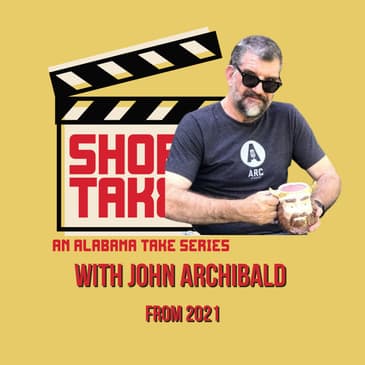
John Archibald, a Pulitzer Prize-winning journalist and author, dives deep into the complexities of race and familial legacy in the latest episode of Short Takes. As he discusses his memoir, 'Shaking the Gates of Hell,' he reflects on his father's role as a minister during the civil rights movement, grappling with the nuances of silence and accountability in the face of racism. The episode offers listeners a unique perspective on how Archibald's upbringing in Alabama shaped his understanding of contemporary issues surrounding race and identity. With a candid exploration of personal experiences, he shares insights on receiving hate mail for his honest reporting and the importance of not remaining silent about uncomfortable truths. Archibald's engaging storytelling and thoughtful reflections invite listeners to consider their own narratives while navigating the ongoing dialogue about race in America, making this episode a must-listen for anyone interested in the intersections of personal history and social justice.
Takeaways:
- John Archibald's memoir, "Shaking the Gates of Hell," explores his father's role during the civil rights movement, intertwining personal reflection with historical context.
- The podcast emphasizes the significance of speaking out against silence, particularly regarding racism and social justice issues in modern society.
- Listeners learn about the profound impact of childhood experiences in Alabama on John Archibald's views and writings, revealing shared sentiments among Southern communities.
- Archibald reflects on the complexities of writing about race as a white man, grappling with the weight of responsibility and the quest for authenticity in his narrative.
- The discussion highlights the emotional toll of receiving hate mail for exposing uncomfortable truths about politics and societal issues in Alabama.
- A humorous vision of a funeral party underscores Archibald's belief in the power of storytelling and the celebration of life through shared memories and laughter.
Links referenced in this episode:
Okay.
Speaker BWe'll continue with an episode of Short takes from season one.
Speaker BThis is the second episode of that season one I did with John Archibald in 2021.
Speaker BNote that the dates and references may be four years old or so.
Speaker BIf you don't know John, he's been a journalist in the south for over 35 years now.
Speaker BYou can catch his writings on AL.com.
Speaker Bhe has a fantastic newsletter as well, which I highly recommend you subscribe to.
Speaker BHe's a native to the state of Alabama.
Speaker BHe's a two time Pulitzer prize winning reporter and writer.
Speaker BAnd at the time of this recording, he was a newly minted author of the outstanding nonfiction book Shaking the Gates of Hell.
Speaker BA search for family and truth in the wake of the civil rights revolution.
Speaker BThe book is well worth your time and it's John's examination of how his father, an Alabama minister, dealt with the civil rights movement as it was happening.
Speaker BDid he handle it with grace?
Speaker BDid he handle it correctly?
Speaker BWas he on the right side?
Speaker BWhat did he have to say from the pulpit and beyond?
Speaker BPlus, in the book, John discusses the first person point of view he has on the events of the civil rights movement and where those events take us today.
Speaker BBut in our interview with short text, which you're going to hear, John discusses his own life, the racism he's seen in our modern Alabama, all the hate mail he receives for telling the truth, and he receives a lot in Alabama.
Speaker BWhen you point out things, sometimes people do not like it.
Speaker BJohn also talks about what he hopes happens at his own funeral.
Speaker BJohn Archibald's a deep, thoughtful and interesting guy.
Speaker BSo I hope you find this one as insightful as I did.
Speaker AHere it is.
Speaker CForeign.
Speaker AHello.
Speaker AWelcome back to the Alabama Take series, Short Takes.
Speaker AI'm your host, Blaine Duncan.
Speaker AIf you're tuning in for the first time, Short Takes is a brief interview talk show with a favorite artist, writer, painter, professional.
Speaker AWhat we do is we limit ourselves to only four questions and as you might know by now, that fourth question is always the same.
Speaker AJoining me today, I am very honored.
Speaker AIt's Pulitzer prize winning author AL.com columnist and journalist, Mr. John Archibald.
Speaker AHey, John.
Speaker CHey, how are you today?
Speaker CAppreciate you.
Speaker AI'm doing very well.
Speaker ASo how's it going up in Boston today?
Speaker COh, it's, it's nice.
Speaker CIt's actually creeping up into the 50s today, which is like what, 90 at home?
Speaker CSo.
Speaker AI imagine that the snow is.
Speaker AYou might be getting tired of that if you've seen a lot of it.
Speaker CYeah, it's gone now finally.
Speaker CBut you know, one of the things I wanted to do was experience a real winter in my life.
Speaker CAnd I finally got that.
Speaker AThat is a goal for me.
Speaker AAt some point, maybe I can do experience one.
Speaker AI don't know if I can handle it for as long as you have, but that would be nice.
Speaker AIn case anyone's wondering.
Speaker ABeyondal.com John has recently released a memoir titled Shaking the Gates of A Search for and Truth in the Wake of the Civil Rights Revolution.
Speaker AIt's about growing up in Alabama in the 60s, 70s, and 80s.
Speaker AYour book is largely about reckoning with the danger of silence, I would say, particularly the evils of racism or bias.
Speaker AIt had to have taken a lot of self awareness and reflection to produce, I'd bet.
Speaker CWell, I hope so.
Speaker CI hope so.
Speaker CI mean, you know, it was very difficult for me to find the right words, you know, to find the right tone in between.
Speaker CYou know, part of it is holding my dad accountable.
Speaker CAnd my dad was a good man, so I wanted to show the full picture of him as well.
Speaker CSo it's about.
Speaker CBut it is about.
Speaker CYou've got it pegged.
Speaker CIt's about silence and the danger it causes.
Speaker AI'm glad you mentioned tone.
Speaker AThat might have been the word I was searching for.
Speaker AI talked to you just a second before we went on air.
Speaker AThe tone of it is pitch perfect.
Speaker AI feel like a lot of people my age and older from Alabama, from Georgia, from Tennessee, you name it, would have very similar experiences.
Speaker AAnd the tone is just moving when it needs to be.
Speaker AIt's reflective when it needs to be.
Speaker AI really think it's a great work of nonfiction.
Speaker CThank you.
Speaker CI have been really pleased with the fact that most people seem to get it.
Speaker CAnd you can imagine, you know, you're writing a book that's largely about race as a white guy.
Speaker CAnd let's face it, I finished this book in 2019 and turned it in.
Speaker CSo having missed all of 2020 being a white guy writing a book about race, you can imagine that I was.
Speaker CI spent a lot of sleepless nights worrying that I got it just right.
Speaker CAnd I don't know that I got it just right, but I feel good about it.
Speaker CThey're my words, and I think I did the best I could to pick the right ones.
Speaker ADefinitely your words.
Speaker ADefinitely your life, too.
Speaker AIt's all in there.
Speaker ABefore we get into our four questions, which are a little bit more open and philosophical, I still want to talk just a little about this work.
Speaker AWhat do you see now in our time period that you saw or thought about when you were a boy growing up in those camps and with your dad in the ministry.
Speaker CWell, you know, all of that, you know, shaped me into who I am.
Speaker CI think, you know, those kinds of things are really a lot of shared experiences from people in the south.
Speaker CAnd, you know, whether it's church or whether it's school or whether it's, you know, camps or outdoors and fishing and those sorts of things.
Speaker CBut, you know, the thing that bothers me if you ask me, and that may not be what you asked me, but, you know, I was born in 63, so all of which was such a significant year in the.
Speaker CIn the.
Speaker CIn the civil rights movement, you know, outside Birmingham, Alabama.
Speaker CAnd for my whole life, I've been unable, and even while studying that period, you know, unable to really kind of put myself back in it and say, you know, how.
Speaker CYou know, to look at pictures of the mobs and the white mobs and, you know, the.
Speaker CSee the beatings and the burnings and the bombings and all that.
Speaker CHow did.
Speaker CHow does this happen?
Speaker CBecause all my life, you just didn't hear that people, you know, had a sense of shame, perhaps, about racism or those feelings, and so they didn't talk about them.
Speaker CBut in more recent years, and not just in Alabama, I'm talking about across the country and the world, you hear that language a lot more that sounds a lot like 1963 than it did 1973 or 83 or 93 or 2003.
Speaker CSo.
Speaker COr even 2013.
Speaker CSo in some ways, you know, it feels like you can better understand that climate now than you could for most of my life.
Speaker CWhich means it's important.
Speaker AVery.
Speaker AYes.
Speaker CTo not be silent about it.
Speaker AYes.
Speaker AI agree.
Speaker AI won't give away anything because I think people will enjoy the book.
Speaker ABut there are two instances in the book that are probably a little bit more personal that I found just moving.
Speaker AThere's the scene with your father anticipating Christmas and doing the list, and there's a scene where you bring in what seems to be a dog that needs a home.
Speaker AAnd those two scenes in the book just.
Speaker AI still think about.
Speaker AI've read them a while ago, a week or so ago, and I'm still pondering them.
Speaker AAnd I think they work so well in the context of everything else.
Speaker AAnyone who picks it up and sees the subtitle will know what the context is.
Speaker ABut those things, those.
Speaker AThose personal editions are just touching.
Speaker AThey were touching, and they were great.
Speaker AAnd that takes some strength, I think, to open up like that.
Speaker CWell, thank you.
Speaker CFor those who want to know, we still have Barney the dog who arrived on that morning of my dad's funeral.
Speaker CAnd he's a lot of trouble, but he's a good dog.
Speaker AGood for Barney.
Speaker AGlad he found you.
Speaker CYeah, I'm glad he found us, too.
Speaker AWell, let's get into the four questions and we'll see if we can have some fun with them or get some in depth thoughts going.
Speaker ASo the first one, what's a harsh truth that you have a tendency to ignore in your own life?
Speaker CYou know, I want to say.
Speaker CI want to say that it has to do with seeing good people.
Speaker CHonestly, that's a strange thing.
Speaker CIt's not harsh in the sense that.
Speaker CBut I have a tendency, I think, to occasionally be too cynical about people, and particularly politicians, in which I have difficult time saying, hey, you did a good job.
Speaker CAnd because, you know, I mean, sadly, because I write about politics in Alabama, usually when I've done that in the past, it has come back to bite me.
Speaker CSo it kind of poisons me.
Speaker CBut I think that's bad because I think that part of, you know, we're talking about the importance of silence.
Speaker CIt's not just about saying bad things, it's about saying good things when people deserve it.
Speaker CBut also, also it just struck me on a more, on a more personal.
Speaker CI mean, you know, something that's more difficult for me is I think I've been too.
Speaker CI think I was ambivalent too long about the death penalty because I had to cover, what, six executions and over the course of time and witnessed several of those.
Speaker CAnd I always thought.
Speaker CAnd that always, of course, came on the heels of talking to both sides of the issue.
Speaker CAnd I did all of that as a straight news reporter.
Speaker CAnd I tried very hard to be down the middle on those things.
Speaker CSo I never really allowed myself to think or understand about it.
Speaker CBut in recent years, as we've come to understand, just how many people are on death row without adequate counsel or without a lot of evidence against them, and we continue to see people who were improperly convicted run through with bad evidence.
Speaker CI think that I've begun to feel like I haven't been vocal enough about it because I think the process is skewed.
Speaker CAnd I think that people, particularly in a state that proclaims to love life, it's awfully hypocritical for us to rush through that process the way we tend to do.
Speaker AVirginia banned the death penalty recently, I guess the first southern state to do so.
Speaker ASo there's hope.
Speaker CYou know, there needs to be more conversation about it.
Speaker AAt the very least, I thoroughly agree with that.
Speaker AThere are times when I not sure where my straddling lands.
Speaker CSo that's how I felt about it as well.
Speaker AYeah.
Speaker AInteresting.
Speaker AI'm an avid follower.
Speaker AFollower of you on Twitter.
Speaker AAnd I know every now and again both you and the guys like Kyle will share that you get what I would call hate email.
Speaker AWhat's something you wish you knew?
Speaker AWhat's something you wish people knew more deeply about your work?
Speaker AMaybe especially these people who send the hate mail or not.
Speaker CYeah.
Speaker CYeah.
Speaker CI think, first of all, I don't necessarily think that people who send the worst of it want to know anything about, nor do I think they really read.
Speaker CBut I think I would really like, you know, I would really like them to know the broad history of me, I guess, in the sense that, you know, Alabama before 2010 was dominated by Democratic politics, which people tend to forget, which is a relatively recent time.
Speaker CAnd I've been doing this for 35 years.
Speaker CAnd I would hope they know that any of the.
Speaker CI mean, obviously I write an opinion column now and most people who read me know exactly how I feel on the issues.
Speaker CBut.
Speaker CAnd which would put me to the left of most people in Alabama, probably.
Speaker CBut it is not partisan in any way.
Speaker CAnd I would.
Speaker CI would like to.
Speaker CFor them to remember.
Speaker CTo go back and remember or look to see how the Democratic politicians felt about me before 2010, which was pretty much exactly like the Republican politicians think of me right now in the sense that there was a lot of calling out of corruption and mismanagement and those things.
Speaker CAnd it's not the.
Speaker CThe red or the blue or the letter before the name that I care about.
Speaker CIt's not the partisanship that I care about.
Speaker CIt's simply that I feel like I have an obligation to say what I think is right and what, you know, my reporting indicates is right.
Speaker CAnd so before they, you know, it's very difficult in this day and age because we all have a tendency to judge people on the snap thing or one phrase or whether they're wearing a mask or not, or million different things.
Speaker CTrue.
Speaker CAnd so it's easy to be painted with a broad brush.
Speaker CAnd that's.
Speaker CI just would like people to remember that it has.
Speaker CIt has that.
Speaker CThat my sword has sliced in both directions when I thought it necessary.
Speaker CYeah.
Speaker AGood.
Speaker AI'm always amazed at.
Speaker AI assume some of these people even follow you online, and yet they take every opportunity to be angry about.
Speaker AAnd I'm thinking, do you not follow him?
Speaker CIs this such is the nature of Twitter, which is both a wonderful tool and a.
Speaker CAn emotional disaster.
Speaker AIt is.
Speaker ASo.
Speaker ASo having to.
Speaker AHaving probably been to your share of funerals, as the son and grandson of a preacher, I bet you may have thought about this question.
Speaker AWhat do you hope people will say about you if it's your funeral or it's your retirement?
Speaker AWhat do you hope they look back and say, well, I don't.
Speaker CI have thought about this funeral thing maybe more than is necessary, if only because I'm trying to put together a good Spotify playlist for.
Speaker CSeriously, because I want my funeral to be a party.
Speaker CYes.
Speaker CIn which, you know, I have.
Speaker CMy most fundamental belief is that we are the sum of our stories.
Speaker CRight.
Speaker CI mean, what we do makes us who we are.
Speaker CAnd some of that's good, and some of that's not good, but it all comes together to make us who we are, whether we regret it or not.
Speaker CSo I would love at my funeral, which I don't want to call a funeral, I want to call it a. I want to call it a party.
Speaker CAnd I want people to listen to music I like and I want them to tell stories about me, whether they're embarrassing or not.
Speaker CAnd just so people can know what they remembered and if.
Speaker CAnd I think that probably would do a.
Speaker CAnd I want them to drink tequila too, while they're doing it, because they're not going to tell good stories unless they do.
Speaker CSo they're gonna have to do tequila shots and they're gonna have to tell stories about something they remember.
Speaker CAnd then I'll be happy.
Speaker CI'll be dead, but I'll be happy.
Speaker AWell, that'll.
Speaker AWe.
Speaker AThat'll be years and years from now.
Speaker AWe hope, but.
Speaker CWe hope.
Speaker ABut that's a great one because I've always hoped that that's how people will reflect on me in more of a sense of joy or a place of joy, maybe even not even in the funeral home or church.
Speaker CI do not want to go into funeral.
Speaker CAlso, I gotta tell you, my whole goal in life really is to beat the death industrial complex somehow, which is, you know, because, I mean, no funeral home.
Speaker CIf I can get a.
Speaker CIf I can get.
Speaker CI mean, I know they'll still charge me for the incineration process, as I like to call it, but, you know, any way I can find to thwart that, I would.
Speaker CI would like to do that just because.
Speaker CI don't know why.
Speaker CIt just bugs me.
Speaker AI'm happy you said that.
Speaker AI'm on board with that.
Speaker AAnd I may borrow that phrase from you the death industrial.
Speaker CIf I could just build a bonfire outside, you know, that would be great, but unfortunately that is not allowed.
Speaker ARight, well, maybe the bonfire for the sharing of the stories then.
Speaker CYeah, there you go.
Speaker CThat's what we need.
Speaker AYeah.
Speaker AWell, let's go to our fourth and final question.
Speaker AMaybe viewers know what this is.
Speaker AIt's what's done up real good for you.
Speaker CAll right.
Speaker CI'm pretty stereotypical on this.
Speaker CI would say Bama football.
Speaker CGotta be there.
Speaker CTo Kill a Mockingbird.
Speaker CGotta be there.
Speaker CThe Princess Bride.
Speaker CGotta be there.
Speaker ANice.
Speaker CBecause, you know, I realized.
Speaker CYou know, I realized one time my editor pointed out this was several years ago, that he went back and found columns from three Augusts in a row.
Speaker CI don't know why August, but just August, three Augusts in a row, where I had written columns that were essentially based on the Princess Bride, so.
Speaker COr phrases from.
Speaker CDifferent phrases from the Princess Bride, which always apply to Alabama politic.
Speaker CYou keep using that word.
Speaker CI don't think, you know, it means what you think it means.
Speaker CInconceivable, etc.
Speaker CEtc.
Speaker CSo, I mean, the Princess Bride, I could go on and on and on.
Speaker CThere's.
Speaker CThere's a book I give away all the time.
Speaker CIt's called Einstein's Dreams by Alan Lightman, who is a physicist and a writing instructor at mit, which is strange combination when you think about it, but it's a book about.
Speaker CIt just imagines what Einstein might dream about.
Speaker CAnd it's not a book.
Speaker CIf you had told me that, I would never have read it.
Speaker CBut it's just such a beautiful book and it's so easy to read and it's so poetic that it just drew me in and made me love it.
Speaker CAnd so I guess if I had to answer in, if I had to pick just one of those answers and I could take album football out and still just go every Saturday when the DNA kicked in.
Speaker ASure.
Speaker CI'd go with Einstein's Dreams.
Speaker ARight.
Speaker AOkay.
Speaker AI've never heard of that book.
Speaker AGood recommendation.
Speaker CYeah, you should read it.
Speaker CI'll send you one.
Speaker AHey, I'll take it.
Speaker AAnd I'll read it too.
Speaker AAnd I could.
Speaker AI can quote those opening lines to To Kill a Mockingbird.
Speaker AAnd that last line, I better not quote it.
Speaker AIt'll bring me to tears.
Speaker CI love that book.
Speaker AAtticus was still there and he'd be there all night.
Speaker ARight?
Speaker BIt's beautiful.
Speaker AAnd it fits so well with your work, which hones in on your dad, who seemed like a beautiful person too.
Speaker AI think you've done him a great honor.
Speaker AThank you for taking your time to talk to me.
Speaker AI know you have a busy schedule.
Speaker AQuickly though, would you like to point somewhere where you'd like for our audience to find your book?
Speaker CSpecifically, you know I love the local bookstores so you know Alabama Booksmith or thank you Books or little professor in Birmingham are great but you can get it anywhere.
Speaker AYou can.
Speaker AYes, you sure can folks.
Speaker AHis writing is top notch online.
Speaker AAl.com the Pulitzer suggests as much.
Speaker AGo seek out John Archibald but maybe most importantly find his book shaking the Gates of Hell about his and his family's growth during the civil rights movement, the tumultuous time during Birmingham in the 60s, 70s, even into the 80s.
Speaker AThe book is very layered.
Speaker ABe careful.
Speaker AIt will cause you your own self reflection so so be aware of that but hopefully in a good way.
Speaker AAs for our viewers, we'll see you again soon.
Speaker AThanks again to John.
Speaker ATake care.